
Financial benefits of sustainable investing practices are not just about making money; they’re also about creating a positive impact on the world we live in. Imagine a world where your investments not only grow your wealth but also contribute to a sustainable future for generations to come.
With the increasing focus on environmental, social, and governance (ESG) factors, sustainable investing is gaining momentum as investors realize the potential for long-term financial gains while making a difference in the world.
Financial Benefits of Sustainable Investing Practices
Sustainable investing involves considering environmental, social, and governance (ESG) factors in investment decisions. While it may seem like a responsible choice, it also offers significant financial benefits in the long run.
Long-Term Financial Gains
Sustainable investing can lead to long-term financial gains by identifying companies that are well-positioned to thrive in a changing world. By focusing on ESG factors, investors can select companies with strong sustainability practices that are likely to outperform their competitors over time.
This can result in higher returns and better risk-adjusted performance for investors.
Examples of Financial Success
One example of a company that has seen financial success through sustainable investing practices is Tesla. Tesla’s focus on renewable energy and electric vehicles has not only positioned them as a leader in the industry but has also driven significant financial growth.
Another example is Unilever, which has integrated sustainability into its business model and has seen positive financial results as a result.
Reducing Financial Risks
Sustainable investing can also help reduce financial risks in the long run. Companies that prioritize ESG factors are better equipped to navigate environmental and social challenges, regulatory changes, and shifting consumer preferences. By investing in these companies, investors can mitigate risks associated with climate change, resource scarcity, and other sustainability issues.
Financial Technology in Sustainable Investing
In recent years, financial technology has played a crucial role in revolutionizing sustainable investing practices. Fintech platforms have made sustainable investments more accessible to a wider audience and have provided tools for tracking and analyzing sustainability metrics in investments.
Role of Fintech Platforms
Fintech platforms have democratized sustainable investing by lowering barriers to entry and providing user-friendly interfaces for investors. These platforms offer a wide range of sustainable investment options, from green bonds to socially responsible mutual funds, allowing individuals to align their investment portfolios with their values.
Benefits of Using Financial Technology Tools
Utilizing financial technology tools for tracking and analyzing sustainability metrics in investments has numerous benefits. These tools can provide real-time data on environmental, social, and governance (ESG) factors, enabling investors to make informed decisions based on the impact of their investments.
Additionally, fintech tools can help investors assess the long-term sustainability and performance of their portfolios, leading to more sustainable and profitable investment strategies.
Financial Advice for Sustainable Investing

Investing with sustainability in mind has become increasingly popular among individuals seeking to align their financial goals with their values. Here are some tips for those looking to incorporate sustainable investing into their portfolios, the importance of seeking professional financial advice, and how to balance financial returns with sustainable impact.
Tips for Sustainable Investing
- Research companies or funds that align with your values: Look for companies that prioritize environmental, social, and governance (ESG) factors in their business practices.
- Diversify your portfolio: Spread your investments across different sectors and asset classes to reduce risk and maximize returns.
- Consider impact investing: Allocate a portion of your portfolio to investments that generate positive social or environmental impact alongside financial returns.
Importance of Professional Financial Advice, Financial benefits of sustainable investing practices
Seeking advice from a financial advisor who specializes in sustainable investing can help you navigate the complexities of this growing field. They can provide tailored guidance based on your financial goals, risk tolerance, and values.
Balancing Financial Returns with Sustainable Impact
- Set clear investment goals: Define your financial objectives and desired level of sustainable impact to guide your decision-making.
- Evaluate performance metrics: Consider both financial returns and ESG criteria when assessing the success of your investments.
- Stay informed: Keep up to date with market trends, regulatory changes, and emerging opportunities in sustainable investing to make informed choices.
Investment Strategies for Sustainable Investing: Financial Benefits Of Sustainable Investing Practices
Investment strategies for sustainable investing involve selecting assets based on environmental, social, and governance (ESG) criteria to generate long-term positive impact while achieving financial returns. These strategies aim to align investor values with their financial goals, promoting responsible and sustainable practices in the companies they invest in.
Sustainable Investment Approaches
- Impact Investing: Focuses on generating measurable social or environmental impact alongside financial returns. Investors actively seek out opportunities to invest in companies or projects that address specific ESG issues.
- ESG Integration: Incorporates ESG factors into traditional financial analysis to identify risks and opportunities that may not be captured by financial metrics alone. This approach aims to enhance investment decision-making and long-term performance.
- Thematic Investing: Targets specific sustainability themes such as clean energy, water conservation, or gender equality. Investors allocate capital to sectors or industries aligned with their values and long-term trends in sustainability.
Comparison with Traditional Investment Strategies
- Traditional investment strategies primarily focus on financial returns without considering ESG factors. They may overlook risks related to sustainability issues and miss out on opportunities presented by companies with strong ESG performance.
- Sustainable investment approaches take a holistic view of companies, considering their impact on society and the environment in addition to financial performance. This integration of ESG factors can lead to more informed investment decisions and potentially better long-term returns.
Potential Returns and Risks
- Potential Returns: Sustainable investment strategies have the potential to deliver competitive financial returns while also contributing to positive social and environmental outcomes. Companies with strong ESG performance may be better positioned to weather market volatility and regulatory changes.
- Risks: Risks associated with sustainable investing include regulatory, reputational, and operational risks linked to ESG issues. Investors need to conduct thorough due diligence and monitor ESG performance to mitigate these risks and make informed investment decisions.
Financial Wellness and Sustainable Investing
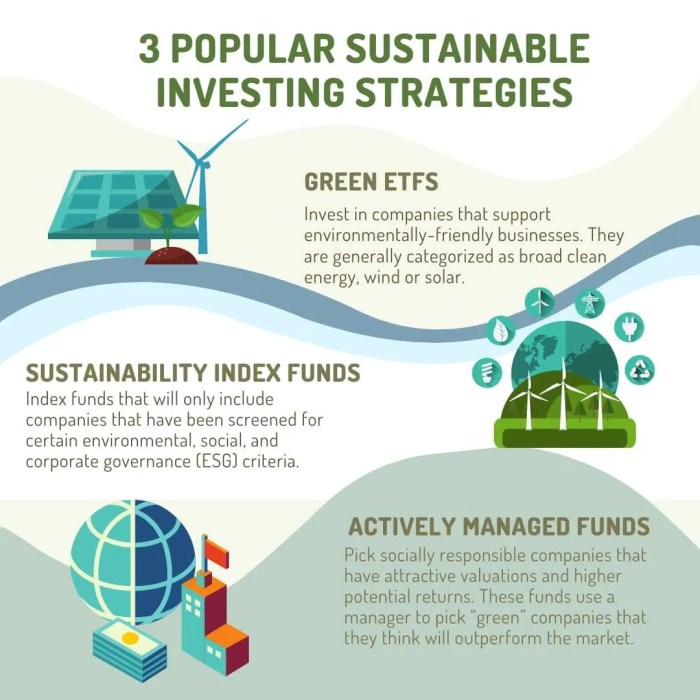
Sustainable investing goes beyond just generating financial returns; it also plays a crucial role in promoting overall financial wellness. By aligning your investments with companies that prioritize environmental, social, and governance (ESG) factors, you can not only contribute to a more sustainable future but also potentially enhance your financial health in the long run.
Positive Impact of Sustainable Investments on Financial Health
Investing in sustainable companies can lead to several financial benefits for individuals. For example, companies with strong sustainability practices are often better equipped to manage risks related to climate change, resource scarcity, and regulatory changes. By investing in these companies, individuals can potentially reduce their exposure to such risks and safeguard their portfolios against future uncertainties.Additionally, sustainable companies are increasingly viewed favorably by consumers, employees, and investors.
This positive reputation can translate into higher customer loyalty, improved employee retention, and increased market value for the company. As a result, investing in these companies can lead to higher returns and long-term growth potential for investors.
Connection Between Financial Wellness and Sustainable Investment Practices
Financial wellness is not just about building wealth; it also encompasses financial stability, security, and peace of mind. Sustainable investing aligns with these goals by encouraging investors to consider not just short-term financial gains but also the long-term impact of their investment decisions on society and the environment.By incorporating ESG factors into their investment strategies, individuals can build a more resilient and diversified portfolio that is better positioned to navigate the challenges of a rapidly changing world.
This approach can help investors achieve their financial goals while also making a positive impact on the planet and society as a whole.
Financial Planning with Sustainable Investing
Sustainable investing has gained significant traction in recent years as investors increasingly prioritize environmental, social, and governance (ESG) factors in their investment decisions. Integrating sustainable investing into a comprehensive financial plan not only aligns investments with personal values but also has the potential to generate long-term financial returns.
Here, we will explore how sustainable investments can be incorporated into financial planning strategies to help individuals achieve their financial goals.
Integrating Sustainable Investing into Financial Planning
When incorporating sustainable investing into financial planning, individuals can start by assessing their financial goals, risk tolerance, and time horizon. This involves determining the objectives they want to achieve through their investments and understanding the level of risk they are willing to take.
Once these factors are established, investors can then identify sustainable investment opportunities that align with their values and financial objectives.
- Evaluate ESG Factors: Consider companies or funds that prioritize environmental sustainability, social responsibility, and good governance practices.
- Diversify Investments: Build a diversified portfolio that includes a mix of sustainable assets across various sectors and regions to spread risk and maximize returns.
- Monitor Performance: Regularly review the performance of sustainable investments to ensure they are meeting financial goals and ESG criteria.
- Seek Professional Advice: Consult with a financial advisor who specializes in sustainable investing to develop a customized financial plan that integrates ESG considerations.
Benefits of Sustainable Investments in Financial Planning
Sustainable investments not only promote positive social and environmental change but also offer financial benefits that can help individuals achieve their long-term financial goals. By incorporating sustainable investing into financial planning, investors can:
- Generate Competitive Returns: Studies have shown that companies with strong ESG practices tend to outperform their peers over the long term, potentially leading to higher investment returns.
- Reduce Risk: By investing in companies with sustainable business practices, investors can mitigate risks related to environmental, social, and governance issues that may impact financial performance.
- Create Long-Term Value: Sustainable investments have the potential to create long-term value by supporting companies that are well-positioned to thrive in a changing economic landscape driven by sustainability trends.
Financial Mindset and Sustainable Investing
Having a financial mindset that aligns with sustainable investing values is crucial for making informed and impactful investment decisions. By prioritizing long-term sustainability over short-term gains, investors can contribute to positive environmental and social change while also potentially achieving financial growth.
Importance of Cultivating a Financial Mindset for Sustainable Investing
Developing a financial mindset that values sustainability can lead to more responsible investment choices. It involves considering the environmental, social, and governance (ESG) factors of potential investments, rather than solely focusing on financial returns. This mindset encourages investors to look beyond immediate profits and consider the long-term implications of their investment decisions.
- Research shows that companies with strong sustainability practices tend to outperform their peers financially in the long run, indicating that sustainable investing can be financially rewarding.
- By aligning financial goals with sustainability objectives, investors can contribute to a more sustainable future while potentially benefiting financially.
- A financial mindset that prioritizes sustainability can help investors make more informed decisions, considering not only financial returns but also the impact of their investments on the environment and society.
Tips for Developing a Financial Mindset for Sustainable Investing
Cultivating a financial mindset that aligns with sustainable investing values requires conscious effort and a commitment to making a positive impact. Here are some tips to help develop a mindset that prioritizes sustainability over short-term gains:
- Educate yourself about sustainable investing principles and the importance of ESG factors in investment decisions.
- Set clear financial goals that align with your values and sustainability objectives.
- Regularly review and assess your investment portfolio to ensure it remains aligned with your sustainability priorities.
- Seek guidance from financial advisors or experts in sustainable investing to make informed decisions that reflect your values.
- Stay informed about global sustainability trends and how they can impact your investment choices.
Positive Financial Mindset and Better Decision-making in Sustainable Investments
A positive financial mindset that values sustainability can lead to better decision-making in sustainable investments. By considering the long-term implications of their investment choices and prioritizing sustainability, investors can make informed decisions that align with their values and financial goals.
Investing in companies with strong sustainability practices not only benefits the environment and society but can also lead to potentially higher financial returns in the long term.
Money Management for Wealth and Wellness

Effective money management is crucial for building wealth through sustainable investing. By managing finances wisely, individuals can not only achieve their financial goals but also support their overall wellness. The relationship between money management, wealth accumulation, and personal well-being is interconnected, and it is essential to strike a balance to ensure a secure financial future while maintaining a healthy lifestyle.
Strategies for Effective Money Management
- Create a budget and track expenses regularly to ensure spending aligns with financial goals.
- Automate savings and investments to make it easier to set aside money for the future.
- Diversify investments to mitigate risk and maximize returns over the long term.
- Regularly review and adjust financial plans based on changing circumstances and goals.
- Seek professional advice from financial advisors to optimize investment strategies and financial decisions.
The Importance of Money Management in Wealth Accumulation and Wellness
Effective money management plays a crucial role in wealth accumulation as it helps individuals allocate resources efficiently, minimize debt, and maximize savings and investments. By managing finances well, individuals can reduce financial stress, improve their overall well-being, and achieve a sense of financial security.
It is not just about accumulating wealth but also about using it wisely to support a fulfilling and balanced lifestyle.
Epilogue
In conclusion, the financial benefits of sustainable investing practices go beyond just monetary returns. By aligning your investments with your values, you can achieve both financial success and make a positive impact on the world around you.
FAQ Explained
How can sustainable investing lead to long-term financial gains?
Sustainable investing focuses on companies with strong ESG practices, which can lead to more stable and profitable investments over time.
Why is seeking professional financial advice important for sustainable investing?
Professional advice can help you navigate the complexities of sustainable investing, ensuring that your investments align with your financial goals and values.
What are the different investment strategies that align with sustainable investing principles?
Strategies like ESG integration, impact investing, and shareholder engagement are common approaches to sustainable investing.