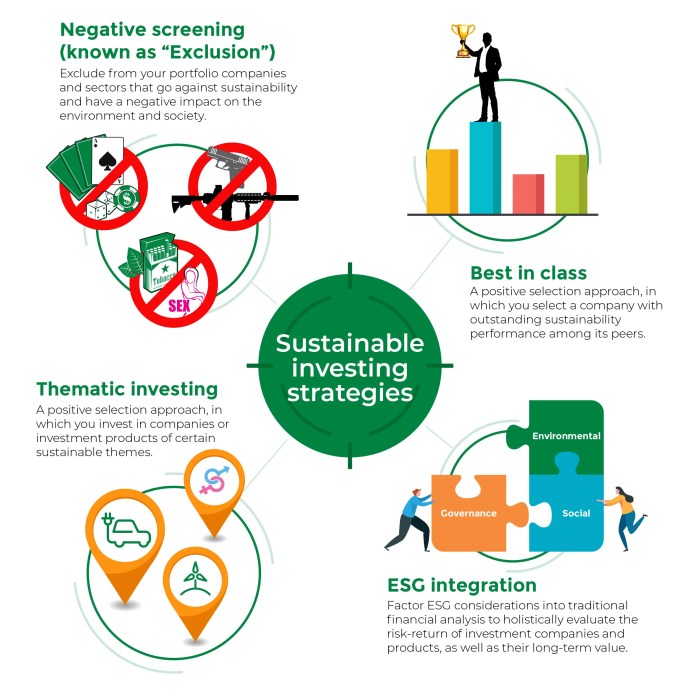
Impact of sustainable investing on portfolio performance sets the stage for this enthralling narrative, offering readers a glimpse into a story that is rich in detail with personal blog style and brimming with originality from the outset.
Sustainable investing goes beyond just financial gains; it’s about making a positive impact on the world while securing a profitable future. This holistic approach to investing is reshaping the way we view portfolios and financial growth.
Impact of Sustainable Investing on Portfolio Performance
Sustainable investing refers to the practice of considering environmental, social, and governance (ESG) factors in investment decisions. This approach not only aligns with ethical values but can also have a significant influence on portfolio performance.
Positive Impact of Sustainable Practices
- Companies that prioritize sustainability often exhibit strong risk management practices, leading to more stable returns over time.
- Investing in businesses with sustainable practices can attract socially conscious investors, creating a positive impact on stock prices.
- Companies focused on sustainability tend to innovate and adapt to changing market conditions, enhancing long-term growth potential.
Examples of Companies with Sustainable Practices
- Tesla, known for its commitment to renewable energy and electric vehicles, has seen its stock price surge due to growing demand for sustainable transportation solutions.
- Unilever, a consumer goods company with a strong focus on social responsibility, has outperformed competitors by integrating sustainability into its business strategy.
- Microsoft has made significant investments in renewable energy and has been recognized for its efforts to reduce carbon emissions, positively impacting its financial performance.
Correlation between Sustainable Investing and Long-Term Growth
- Studies have shown that companies with high ESG ratings tend to outperform their counterparts with lower ESG scores in the long run.
- Long-term investors who prioritize sustainability factors in their portfolios are likely to benefit from reduced risks and enhanced returns over time.
- By focusing on sustainable investing, investors can contribute to a more resilient and future-proof portfolio that aligns with their values and financial goals.
Financial Technology in Sustainable Investing
Financial technology, or fintech, is playing a crucial role in revolutionizing sustainable investing. Fintech tools are leveraging data analytics, artificial intelligence, and automation to make sustainable investing more efficient, transparent, and accessible to a wider audience.
Role of Fintech in Sustainable Investing
- One of the key roles of fintech in sustainable investing is the ability to analyze vast amounts of data quickly and accurately. By leveraging data analytics, fintech platforms can provide valuable insights into the environmental, social, and governance (ESG) performance of companies, helping investors make more informed decisions.
- Fintech is also making sustainable investing more accessible to the masses by offering user-friendly platforms and tools that allow retail investors to easily incorporate ESG factors into their investment decisions. This democratization of sustainable investing is empowering individuals to align their portfolios with their values.
Robo-Advisors and Sustainable Investing
- Robo-advisors, automated investment platforms that use algorithms to create and manage portfolios, are increasingly incorporating sustainable investing options for clients. These platforms offer a range of ESG-focused investment products, allowing investors to customize their portfolios based on their sustainability preferences.
- By automating the investment process, robo-advisors make it easier for investors to diversify their portfolios with sustainable assets, without the need for extensive research or expertise. This accessibility and convenience are driving the adoption of sustainable investing among a broader range of investors.
Financial Advice for Sustainable Investing
In today’s financial landscape, sustainable investing has gained significant traction as investors increasingly prioritize environmental, social, and governance (ESG) factors. As a financial advisor, it is crucial to guide clients towards sustainable investing options that align with their values while also maximizing their financial returns.
Importance of Ethical Considerations in Providing Financial Advice for Sustainable Investing
When offering financial advice for sustainable investing, ethical considerations play a pivotal role in ensuring that investments are not only financially sound but also ethically responsible. Financial advisors must take into account the social and environmental impact of investment decisions, guiding clients towards companies that prioritize sustainability and ethical practices.
- Emphasize the long-term benefits: Encourage clients to consider the long-term benefits of sustainable investing, such as reduced risk exposure to environmental controversies and potential for higher returns in companies with strong ESG performance.
- Align investments with values: Help clients align their investments with their values by selecting companies that are committed to sustainability, social responsibility, and ethical practices.
- Educate clients on ESG factors: Provide education on ESG factors and how they can impact investment performance, helping clients make informed decisions that reflect their values.
Successful Sustainable Investment Strategies Recommended by Financial Advisors
Financial advisors can recommend a variety of successful sustainable investment strategies to clients looking to align their portfolios with ESG principles. Some examples include:
- Impact investing: Directing capital towards companies or projects that generate measurable social or environmental impact alongside financial returns.
- Socially responsible investing (SRI): Investing in companies that meet specific ESG criteria or exclude certain industries based on ethical considerations.
- Green bonds: Investing in bonds issued to finance environmentally friendly projects, such as renewable energy or sustainable infrastructure.
Investment Strategies for Sustainable Investing
When it comes to sustainable investing, there are distinct differences between traditional investment strategies and sustainable investment strategies. While traditional investing focuses primarily on financial returns, sustainable investing takes into account environmental, social, and governance (ESG) factors as well.
ESG Criteria in Investment Decision-Making
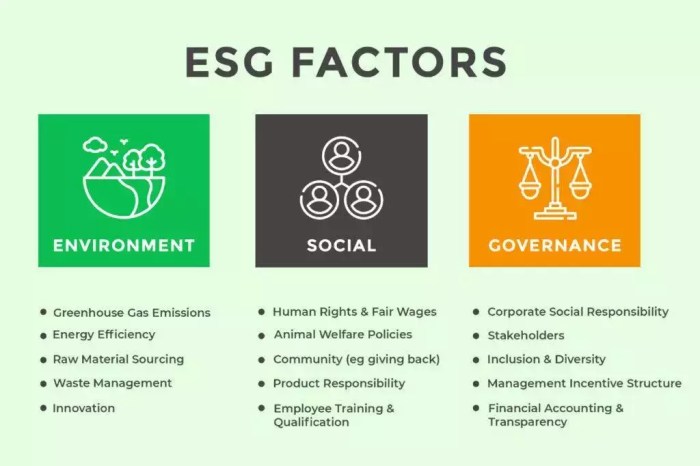
ESG criteria play a crucial role in sustainable investing, guiding investors to consider not only financial performance but also the impact that their investments have on the world. Environmental factors assess how a company performs in terms of resource use, pollution, and climate change.
Social factors look at how a company manages relationships with employees, suppliers, customers, and the communities in which it operates. Governance factors evaluate the company’s leadership, executive pay, audits, internal controls, and shareholder rights.
- Environmental: Companies with high ESG scores tend to perform better in the long run as they are more likely to adapt to changing environmental regulations and consumer preferences.
- Social: Investing in companies with strong social practices can lead to increased employee satisfaction, customer loyalty, and community support.
- Governance: Companies with good governance practices are more likely to make ethical decisions, reduce the risk of scandals, and enhance shareholder value.
Risk Factors and Mitigation
While sustainable investing offers numerous benefits, there are also risk factors to consider. These risks may include regulatory changes, reputational damage, and market volatility. To mitigate these risks, investors can diversify their portfolios, conduct thorough research on ESG factors, engage with company management on sustainability issues, and seek guidance from financial advisors specialized in sustainable investing.
By incorporating ESG criteria into investment decision-making, investors can align their financial goals with their values, contributing to a more sustainable future for both society and the environment.
Financial Wellness through Sustainable Investing
Sustainable investing goes beyond just financial returns; it also encompasses the positive impact on overall financial wellness. By aligning investments with personal values and beliefs, individuals can experience a sense of fulfillment and satisfaction in knowing that their money is being used to promote sustainability and social responsibility.
Psychological Benefits of Sustainable Investing
- Increased sense of purpose and meaning in financial decisions
- Reduced stress and anxiety related to investing
- Enhanced emotional well-being and satisfaction with investment choices
Examples of Positive Impact on Financial Mindset
Investing in companies with strong environmental, social, and governance (ESG) practices can lead to long-term financial stability and growth while supporting sustainable causes.
- Choosing to invest in renewable energy companies can provide financial returns while contributing to a cleaner and more sustainable future.
- Supporting companies with diverse and inclusive practices can lead to positive social impact and financial success.
- Investing in ethical and transparent businesses can build trust and confidence in the financial markets, leading to better overall financial outcomes.
Financial Planning with Sustainable Investing
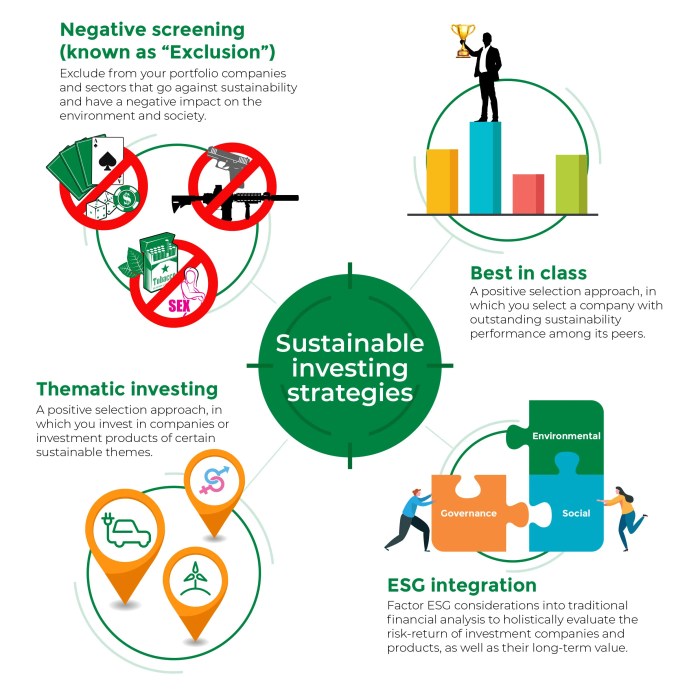
Sustainable investing is not only a way to support environmental and social causes but can also be a strategic approach to financial planning. By integrating sustainable investing into a financial plan, individuals can align their values with their investment goals while potentially achieving long-term financial success.
Integrating Sustainable Investing into a Financial Plan
- Identify Values and Goals: Start by determining what causes or issues are important to you and how they align with your long-term financial goals.
- Evaluate Investment Options: Research sustainable investment opportunities that match your values and financial objectives.
- Create a Diversified Portfolio: Build a well-balanced portfolio that includes a mix of sustainable investments across different sectors and asset classes.
- Monitor and Rebalance: Regularly review your portfolio to ensure it remains aligned with your values and financial goals, making adjustments as needed.
Achieving Long-Term Financial Goals with Sustainable Investing
- Long-Term Performance: Sustainable investments have shown the potential for competitive financial performance over the long term, providing a pathway to reach your financial goals.
- Risk Management: By considering environmental, social, and governance (ESG) factors in investment decisions, individuals can mitigate certain risks and potentially enhance returns.
- Resilience and Adaptability: Sustainable investments are often well-positioned to navigate changing market trends and societal shifts, offering stability in uncertain times.
Balancing Risk and Return in a Sustainable Investment Portfolio
- Diversification: Spread investments across different asset classes, industries, and regions to manage risk and optimize returns within a sustainable portfolio.
- Performance Analysis: Regularly assess the financial performance of sustainable investments to ensure they are meeting your return expectations while considering the impact of ESG factors.
- Alignment with Values: Evaluate the environmental and social impact of investments alongside financial returns to strike a balance that aligns with your values and risk tolerance.
Money Management and Sustainable Investing
Money management principles play a crucial role in sustainable investing, as they help investors align their financial goals with their values and long-term objectives. By incorporating sustainable investing practices into their money management strategies, investors can not only drive positive change in the world but also potentially enhance their portfolio performance.
Diversification Strategies within a Sustainable Investment Portfolio
Diversification is a key strategy in sustainable investing to mitigate risk and maximize returns. Investors can achieve diversification within a sustainable investment portfolio by spreading their investments across different asset classes, sectors, and geographic regions. This helps reduce exposure to any single risk factor and provides a more stable and resilient portfolio.
- Investing in a mix of sustainable assets such as renewable energy, green technology, and socially responsible companies can help spread risk and capture opportunities in emerging industries.
- Allocating investments across various asset classes like equities, bonds, real estate, and alternative investments can further enhance diversification and reduce volatility.
- Considering factors like environmental, social, and governance (ESG) criteria in the selection of investments can also contribute to a well-diversified and sustainable portfolio.
By diversifying their sustainable investment portfolio, investors can potentially achieve a balance between risk and return while staying true to their values and long-term objectives.
Monitoring and Adjusting Investments in Alignment with Sustainable Goals, Impact of sustainable investing on portfolio performance
Monitoring and adjusting investments in alignment with sustainable goals is essential to ensure that the portfolio remains consistent with the investor’s values and objectives over time. This involves regularly assessing the performance of sustainable investments, tracking progress towards sustainability targets, and making adjustments as needed.
- Regularly reviewing the ESG performance of companies in the portfolio and comparing it to industry benchmarks can help investors identify underperforming assets and make informed decisions on whether to hold, sell, or reallocate investments.
- Staying informed about market trends, regulatory changes, and emerging sustainability issues can also guide investors in adjusting their portfolio to capitalize on new opportunities and mitigate risks.
- Engaging with companies and investment managers to advocate for sustainable practices and transparency can further align investments with sustainable goals and drive positive impact.
By actively monitoring and adjusting their investments in alignment with sustainable goals, investors can not only enhance the sustainability of their portfolio but also contribute to positive environmental and social change.
Wealth and Wellness: Impact Of Sustainable Investing On Portfolio Performance
Sustainable investing goes beyond just financial gains; it also encompasses the overall well-being of individuals. The impact of sustainable investing on wealth and wellness is profound, as it aligns financial goals with personal values and societal benefits.
Relationship between Wealth Accumulation and Sustainable Investing Practices
Sustainable investing focuses on companies that prioritize environmental, social, and governance (ESG) factors in their operations. By investing in these companies, individuals can support businesses that are not only financially successful but also socially responsible. This approach can lead to sustainable long-term growth in wealth accumulation while contributing to a more sustainable world.
- Companies with strong ESG practices tend to be more resilient to risks, such as regulatory changes and reputational damage, which can ultimately protect investors’ wealth.
- Investing in sustainable sectors, such as renewable energy or clean technology, can provide opportunities for growth and diversification, leading to increased wealth over time.
- By aligning investments with personal values, individuals may feel more connected to their wealth, leading to a sense of fulfillment and well-being.
Holistic Approach to Wealth Management through Sustainable Investing
Sustainable investing encourages a holistic approach to wealth management by considering not only financial returns but also the impact of investments on society and the environment. This approach allows individuals to create a more balanced and sustainable portfolio that addresses both financial and non-financial goals.
- Integrating ESG factors into investment decisions can help mitigate risks and identify opportunities that traditional financial analysis may overlook.
- By investing in companies that prioritize sustainability, individuals can contribute to positive societal change while potentially achieving competitive financial returns.
- A holistic approach to wealth management through sustainable investing can lead to a more stable and resilient portfolio, better prepared to navigate the uncertainties of the market.
Real-Life Examples of Wealth and Wellness through Sustainable Investing
There are numerous examples of individuals who have achieved both financial wealth and personal wellness through sustainable investing. One such example is a socially conscious investor who invested in a renewable energy company that not only provided attractive financial returns but also contributed to reducing carbon emissions and combating climate change.
By aligning their investments with their values, these individuals have not only grown their wealth but also found a sense of purpose and fulfillment in making a positive impact on the world.
Final Conclusion
As we conclude our exploration of the impact of sustainable investing on portfolio performance, it’s evident that aligning financial goals with ethical and sustainable practices can lead to not only monetary success but also a sense of fulfillment and purpose.
Embracing sustainable investing is not just a trend; it’s a mindset shift towards a more sustainable and prosperous future.
FAQ Resource
How does sustainable investing affect portfolio performance?
Sustainable investing can enhance portfolio performance by considering environmental, social, and governance factors that contribute to long-term growth and stability.
What are some examples of companies with sustainable practices impacting portfolio performance positively?
Companies like Tesla, Unilever, and Microsoft have shown that integrating sustainability into business practices can lead to improved financial performance and investor confidence.
How can financial advisors help clients navigate sustainable investing options?
Financial advisors can educate clients on the benefits of sustainable investing, recommend suitable strategies, and align investments with their values and long-term goals.
What are the risk factors associated with sustainable investment strategies?
Risk factors in sustainable investing include regulatory changes, reputational risks, and market fluctuations, which can be mitigated through diversification and thorough research.